Showing posts with label need. Show all posts

Wednesday, June 21, 2017

Posted by beni in , , , , , , , , , , , | June 21, 2017

7 Apps That Prove You Don’t Need Adobe Creative Suite on Linux


People have been asking Adobe to make Creative Suite available on Linux for several years now, but Adobe has been adamant about its answer: no. Why not? Most likely because the market share is too small to be worth the effort.
But the demographic is there. The overlap between �Linux users� and �creative users� is larger than many of us would expect, and many of them have been dying for a Linux Creative Suite for years.
The good news is that now, in 2016, viable options do exist.
Between all of the Adobe Creative products currently available, most of them have usable Linux alternatives. And while you won�t be able to use the Creative Cloud mobile apps with them, they�re still worth checking.

For Photoshop: GIMP or Krita

�Photoshop alternatives for Linux� is unsurprisingly one of the most common search queries among first-time Linux users. And while GIMP was the go-to answer for many years, that�s kind of changing now.


linux-creative-suite-gimp


Not that there�s anything wrong with GIMP. In fact, as far as needing a �Photoshop clone� on Linux, there�s nothing better. GIMP is powerful and feature-rich straight out of the box, and can be improved with third-party plugins.
So yes, even though GIMP has its flaws � such as the fact that it isn�t as intuitive or polished � it�s definitely the closest thing to Photoshop right now.


linux-creative-suite-krita


But there�s another program out there that�s been turning heads over the past few years. It�s called Krita and users are slowly abandoning GIMP and flocking over to it instead.
Krita is primarily a tool for digital painters and artists, so it�s only a good alternative to Photoshop if that�s the kind of work you do. But for things like logos, drawings, and artwork, Krita is more user-friendly.

For Lightroom: Darktable or RawTherapee

If you�re a photographer, Photoshop may not actually be the best application for your needs � you might want to use Lightroom instead. Unfortunately, neither are available for Linux, but there is a light at the end of the tunnel.
There are two free alternatives to Lightroom that are actually quite good. Neither is objectively better than the other, so we�ll recommend both and leave it up to you to decide which one you like more.


linux-creative-suite-darktable


The first is Darktable, which is the most oft-recommended program among Linux photographers. The interface is complex but it turns out good results. It�s also relatively light on resource usage, so better for older computers and weaker hardware.


linux-creative-suite-rawtherapee


The second is RawTherapee. The interface is simpler to learn and navigate, but lacks some features that you may need (such as selective editing with masks). RawTherapee is also slightly worse at managing large libraries with lots of photos.
Compare the feature set for Darktable with the feature set for RawTherapee to help make your decision a bit easier.

For Illustrator: Inkscape

Not many free applications can be considered as good as their paid counterparts, but Inkscape is one of them. In fact, it�s one of the best free alternatives to paid software out there. No need to spend money here.


linux-creative-suite-inkscape


Inkscape is what you should use if you want to create or edit vector graphics. Vector graphics are mathematical rather than pixel-based, so they can be printed at any resolution. They�re great for creating infographics, for example.
Although Inkscape suffers from a sub-par interface and lack of professional polish, it�s feature complete and certainly usable in a professional environment if needed.

For Premiere Pro: Lightworks or Kdenlive

Professional video editing has often been seen as an activity best suited for Macs, and only in the past decade have viable options come to light on Windows. But for Linux? Video editing can be a pain.


linux-creative-suite-lightworks


So if you can, we recommend paying for quality Linux software. Lightworks is very good � it was used to edit The Wolf of Wall Street, Pulp Fiction, Hugo, and more � but it�s also a bit costly at $438 (or $25 per month). However, you do get what you pay for.
Sure, Lightworks can be used for free, but there are restrictions. You can only export up to 720p and you lose a lot of quality-of-life features, such as timeline rendering, advanced project management, and Boris FX packages.
The paid version unlocks everything and can export up to 4K.


linux-creative-suite-kdenlive


If you want a video editor that�s completely free but still as professional as possible, Kdenlive is your best option. It�s open source, actively developed, and packed full of advanced features.

For Animate: Synfig

Animate is the program formerly known as Flash Pro, the vector animation program that was used in the past to create Flash animations. Now that the web has moved from Flash to HTML5, Adobe rebranded as Animate.


linux-creative-suite-synfig


Synfig has been the open source alternative to Adobe�s program since 2005, and is still the best choice for those who want to pursue 2D vector animation without handing over cash to Adobe. It�s free and in active development.
Synfig uses its own animation file format, but can export to AVI, MPG, GIF, SVG, PNG, and more. Despite the learning curve, you�ll be able to pick up the ropes quickly enough thanks to the user-contributed documentation and tutorials.

For Audition: Ardour or LMMS

Audition doesn�t get as much time in the limelight as Photoshop or Premiere Pro, but it�s a nifty piece of software that�s worthy of recognition. Formerly known as Cool Edit Pro, Audition is what you�d use to edit digital audio.
Audition is a digital audio workstation in the same line as Logic Pro on OS X. From what I know, Audition is used mainly by professional podcasters, but can be used for so much more, like recording and mixing your own music.


linux-creative-suite-ardour


Audacity is the go-to audio editor for most Linux users, but when Audacity isn�t enough, you should think about either Ardour or LMMS.
Ardour is the best DAW available on Linux right now. Not only does it have a clean and usable interface, but it�s packed full of advanced features. Very good and highly recommended.
It�s available for free but only produces audio up to 10 minutes long. You can unlock the full feature set by buying the full version, which has a �pay what you want� price tag. Seriously, you can buy it for as low as $1.


linux-creative-suite-lmms


LMMS, formerly known as Linux MultiMedia Studio, is another good option. This one is completely free but slightly inferior to Ardour. The interface is a bit harder to grasp and the learning curve is a bit steeper, but it�s still useful.
Check out the LMMS Showcase to see examples of tracks that have been made with LMMS.

For InDesign: Scribus

I don�t know of many people who do desktop publishing on Linux, but if you need an alternative to Adobe InDesign, rest assured that such an alternative does exist. It�s called Scribus.
Scribus can be used to create brochures, newsletters, posters, and even book layouts. It can also be used to create animated and interactive PDFs � the kind of stuff you�d expect from any desktop publishing program worth its salt.
It does have a few downsides though, such as the fact it can�t import or export InDesign files. Also, it�s not entirely polished and free of bugs, which can prove frustrating for heavy users. Fortunately, the Scribus documentation is pretty good.

The Ultimate Linux Creative Suite

If you absolutely need programs that are on par with Adobe, then save yourself the headache. Run a copy of Windows alongside Linux (either in a virtual machine or in a dual-boot setup) and get the Creative Cloud applications.
But if you�re okay with a bit of sacrifice here and there, these programs make for a passable Linux Creative Suite:
  • GIMP
  • Darktable
  • Inkscape
  • Lightworks
  • Synfig
  • Ardour
  • Scribus

Source: http://www.makeuseof.com/tag/7-apps-prove-dont-need-adobe-creative-suite-linux/

Wednesday, June 14, 2017

Posted by beni in , , , , , , | June 14, 2017

9 website trends that need to disappear


With over 150 million blogs online, becoming the next Verge, Elite Daily, or Gizmodo is more challenging as each day progresses. As a result, site owners are getting thirstier for as many likes, follows, and subscriptions as possible so that they can get to push their way through the muck of start-up blogs.
Unfortunately, this has resulted in the implementation of disruptive design techniques. Whether it is trying to get more likes, more page views or just trying to be �different�, most times they just end up annoying readers even more and discouraging them from visiting again.
Here are some of the most common trends on today�s websites that we hope will fade away quickly enough.

1) Pop-up boxes before you start reading


Imagine this. You�re scrolling through the news on your RSS Reader or Reddit and click through to a story. A few seconds after you start reading, the page goes dark and a pop-up box takes center stage asking for a Facebook like.
I didn�t come to your site to like your page; but rather, I came to actually read the article. If I decide to like your page, it�s going to be after I read the story, not before.
The same applies for those sites that black out the whole screen with an overlay in an attempt to get you to download their mobile app when you�re browsing on your phone. No, I just want to read the story.

2) Horizontal scroll website


We are all accustomed to sites that scroll vertically, but there are those few that have chosen to break away from this tradition with a more horizontal approach. This is a somewhat cool idea (for instance when showing a space distance timeline), but generally most horizontal sites are not properly coded and may look wonky when you�re on a tablet.
Horizontal sites work well with brands that showcase products for sale, but not so much for regularly updated blogs such as what was recently done over at  Wired.co.uk.

3) Infinite scroll with a footer

More and more sites are adopting infinite scrolling home pages (i.e. sites that load similar to Facebook�s home page feed). I haven�t been a fan of this as finding old posts can sometimes be a pain, but it�s a thing. However, there are those designers that were smart enough to include their footer links at the bottom instead of to the top or the side. *sarcasm*
Whenever you try to scroll to the bottom, it�s impossible to click the link as new content keeps loading up and pushing those links further down. This is definitely not good news for those trying to get in contact with the site�s manager.

4) �Slideshows�


Ah yes, the infamous slideshow. The idea behind them is to encapsulate a number of related images into one viewing frame with back/forward viewing buttons versus having to click individual images and reloading the page. The problem is that 99% of these galleries are CRAP.
First, there are those JavaScript based galleries which take forever to load, and when they do, they break the website�s design 50% of the time and just stop working. As for mobile users, you guys are screwed because these galleries never seem to function correctly most of the time.
Then there are those �galleries� a.k.a. posts split up into several pages with the intent of garnering more page views and more ad revenue. The whole concept stemmed from the days when extremely long articles were split into two pages to make it easier for readers to digest stories. Unfortunately a lot of sites today are splitting articles into multiple pages with just one point per page.
Whenever I come across these sites, I browse away immediately because I really don�t have the time to reload an entire webpage just to read two lines of text. BuzzFeed has always succeeded with their lists by including all their points on one page versus splitting them into multiple pages.

5) Interstitials


Interstitials are those ads that load up before you visit the actual website. You may have seen them on Business Insider, Gearburn or Forbes. Thankfully less and less sites are using this technique, as this method of advertising is pretty disruptive (just like modal pop ups), even if it�s just a random quote of the day.
Unfortunately interstitials are becoming even more popular on free mobile apps as developers are trying to show more and more ads to profit of the booming mobile market.

6) Every share button possible


Having a Facebook, Twitter, and Google Plus button is fine, but there are those sites that insist of having every share button on the planet. While it may sound good in theory to have more options, there have been a few tests that prove that too many options may actually lead to decreased interactions.

If you�ve never heard of sites like Taboola, Outbrain, or Zergnet, maybe you�ve seen more prominent sites recommending articles such as �5 ways to lose belly fat� on a site that has nothing to do with health and fitness. These native advertising recommendation engines are the new thing as traditional banner advertising has taken a slight stab over the last few years.
I actually have no problem with recommendations from other sites, but most of the times I see crap like �How to make $5000 in 10 minutes� or �How to be a master at making love�. Ugh.

8) Autoplay videos

You�re on a site reading an article about what to get your mother for Christmas and out of nowhere you hear music or someone talking. Where is it coming from?! After panicking and trying to turn the volume down, eventually you discover that there�s an autoplay video somewhere in the sidebar (looking at you IB Times).
Videos are fine, but give us the choice to play them as we may sometimes be a in a situation where our speakers may be set to loud.

9) Ads everywhere

Ads are the bread and butter of most blogs but there are those few that insist on including 3-5 ads within the post�s content itself, making it almost impossible to distinguish the article�s content from the ad itself.
Yes, we all want to make a bit of extra money, but not at the cost of making the reading experience difficult.
Tell us what peeves you the most when visiting a website in the comments below. It would be great if GradeAUnderA could do a video about this!

Posted by beni in , , , , , , , , , , , , , , , , , , | June 14, 2017

A new app Mapnificent get where you need to go in alloted time Travel just got simpler Try demo


Find everywhere you can go in 15 minutes or less

Mapnicicent

Concerned more about how long it takes to get there than how far away it is?  Or...limited on time to eat and need to find someplace to meet your time constraints?

 Mapnificent is the solution. A new app. Just place the pin on the map, and see where you can get in a specified amount of time via public transportation or bicycle.

Imagine how great this app could become once everyone starts to feed their tried and true routes into it!

Cant wait for it to work in Amsterdam. 

Via FlowingData - try the demo:
http://flowingdata.com/2011/06/01/find-everywhere-you-can-go-in-15-minutes-or-less/

Posted via email from colby pre-posterous

Wednesday, June 7, 2017

Posted by beni in , , , , , , , | June 07, 2017

8 Reasons You Need Online Project Management Software


Online Project Management Software

Running a successful business means juggling dozens of projects, tasks, teams and deadlines. Priorities are constantly shifting along with customer demands, and just keeping up seems to take all your time and energy. Online software for project management gives you a leg up, helping you organize and coordinate all your work in a flexible workspace that keeps your entire team on the same page.

Tuesday, April 4, 2017

Posted by beni in , , , , , , , , , , | April 04, 2017

5 Powerful and Most Useful Excel Features you need to know


Microsoft Excel is the most useful and easy tool for business analysts. It has large number of useful formulas, features and bundles of interactive charts. But, most of us are not known of all of them and there are some more features which are powerful and easy to use to make our work simpler. You might not have noticed some of the useful Excel 2013 features like Sparklines, Slicers, Conditional Formatting and other formulas which add value to your work. In this article, I will take you through them and will give you an idea on what are those and how to use them.

Most Useful Excel Features

Among many Excel features, there are some hidden features which are easy to use and you many not know all of them. Without any further delay, we will look at 5 such Excel features.

Sparklines

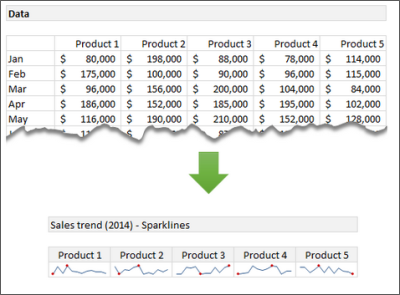
Sparklines were first introduced in Excel 2010 and are used to represent visualizations for the trend across the data in a row. It fits in a single Excel cell and saves the space on the worksheet. This is a cool feature and is very easy to use. Calculating the trend for row data and placing the visualization in the single excel is really a great feature to use.

In order to create your own Sparklines, select the range of data. Click insert on the ribbon and select the type ofSparklines (Line, Column or Win/Loss). Next, enter the range of the target where you want to show the Sparklines. For more information on how to create Sparklines, visit Office Blogs.

Conditional Formatting

Conditional Formatting is a well known feature of Excel. It is used to visually present the data based on the conditions met. It is also useful to create heat maps. This would be helpful to find the interesting patterns by exploring the data effectively.
Most Useful Excel Features
To create the heat map, select the data and head over to the ribbon. Under Home, click Conditional Formatting and then click Color Scales. Now, pick the color scale. You can even set the color scale by editing the formatting rule. For more information on Conditional Formatting, visit Office Support.

SMALL and LARGE Functions

We all know about MAX and MIN functions. They give you the maximum and minimum values of the selected data respectively. But, in order to find the 1st, 2nd, 3rd or nth largest or smallest value of the selected range if data, we can make use of LARGE and SMALL functions respectively.
Small and Large Functions in Excel
In this example, in order to find the top two products for each month, we made use of MATCH and INDEX functions along with LARGE and SMALL functions. For more information, visit SMALL and LARGE functions.

Remove Duplicates

Do not blame me for mentioning this feature in this list. It is very important to get rid of redundant data from the available huge amount of data. It is one of the best ways for cleaning and organizing the data and so thought of having it in this list of powerful Excel features. Removing Duplicates feature was introduced from Excel 2007 and is helpful to remove duplicates which is the most important problem which we face.
Remove Duplicates in Excel
To remove duplicates, select the data and head over to the ribbon. Under Data, click the Remove Duplicates button and what you see the data without duplicates. For more information on how to Find and Remove Duplicates, visit Office.com.

Slicers

Slicers act as visual filters. It helps you to visualize the subset of data as a connected chart or as a raw data. For example, if you want to show the trend of sales of various products, then you can create the interactive sales trend chart using Slicers. Based on the product you select, respective chart is shown. Slicers were first introduced in Excel 2010 and enhanced a lot in Excel 2013.
Slicers in Excel
In Excel 2013, if you want to add Slicer to your charts, select the data range and click on insert > Slicer. Now, select the part of the data you want to use as a filter. In the image above, Product column is used as a filter. How here for more information on how to use Slicers.
For more details on these features and to download the example workbook, visit Office Blogs

Search